


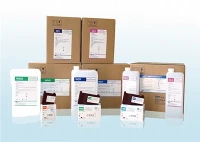


Are there any price differences between high - end and low - end chemiluminescent products?
Hey there! I'm a supplier of chemiluminescent products, and I often get asked about the price differences between high - end and low - end chemiluminescent stuff. So, let's dive right into it.
First off, what exactly are chemiluminescent products? Chemiluminescence is a chemical reaction that produces light. These products are widely used in various fields, like medical diagnostics, environmental monitoring, and even in some cool scientific research.
When it comes to high - end chemiluminescent products, they usually come with a hefty price tag. One of the main reasons is the quality of materials used. High - end products often use top - notch reagents and components. For example, in a chemiluminescent immunoassay analyzer, the high - end ones might use highly pure enzymes and antibodies. These high - quality materials ensure more accurate and reliable results. In medical diagnostics, accuracy is crucial. A small error in a test result could have serious consequences for a patient's treatment. So, the manufacturers invest a lot in getting the best materials, which in turn drives up the price.
Another factor contributing to the high cost of high - end chemiluminescent products is the technology involved. High - end devices often have advanced features and better sensitivity. They can detect very low levels of substances, which is essential in many applications. For instance, in detecting certain diseases, early detection can be a matter of life and death. High - end chemiluminescent analyzers can pick up on these small amounts of disease markers much earlier than their low - end counterparts. Developing and implementing this advanced technology requires a lot of research and development, and that cost is passed on to the consumer.
On the other hand, low - end chemiluminescent products are more budget - friendly. They are a great option for users who don't need the highest level of accuracy or sensitivity. Maybe they are just doing some basic research or have a limited budget. Low - end products might use less pure reagents and have simpler designs. While they may not be as precise as high - end ones, they can still get the job done for many applications.
Let's talk about the performance differences a bit more. High - end chemiluminescent products typically have a wider dynamic range. This means they can accurately measure a larger range of concentrations of the substances they are detecting. For example, in a medical test for a particular biomarker, a high - end analyzer can measure very low to very high levels of that biomarker with high precision. Low - end products, however, may have a more limited dynamic range. They might not be able to accurately measure extremely low or extremely high concentrations.
In terms of reliability, high - end products are often more consistent. They are less likely to give false positives or false negatives. This is because of the better quality control during the manufacturing process and the use of high - quality components. Low - end products may have a slightly higher chance of producing inaccurate results, but again, it depends on the specific application.
Now, let's touch on the maintenance aspect. High - end chemiluminescent products usually come with more comprehensive maintenance and support services. The manufacturers offer regular calibration, software updates, and technical support. This ensures that the product continues to perform at its best over time. Low - end products may not have such extensive support, which could lead to more problems down the line if something goes wrong.
One important thing to note is that the price difference doesn't always mean that high - end products are always the best choice for every situation. It really depends on your specific needs. If you are a large - scale medical laboratory that needs to process a high volume of samples with high accuracy, then a high - end chemiluminescent analyzer might be the way to go. But if you are a small research lab on a tight budget or just doing some preliminary testing, a low - end product could be sufficient.
If you're in the market for chemiluminescent products, you might also be interested in the Chemiluminescent Immunoassay Analyzer Cleaning Solution for Roche. This cleaning solution is designed to keep your analyzer in top condition, whether it's a high - end or low - end model.
So, to sum it up, there are definitely significant price differences between high - end and low - end chemiluminescent products. The high - end ones offer better quality, more advanced features, and higher reliability, but at a higher cost. Low - end products are more affordable and can still meet the needs of many users.

If you're thinking about purchasing chemiluminescent products, I'd be more than happy to have a chat with you. We can discuss your specific requirements and figure out which product is the best fit for you. Whether you're looking for a high - end solution for precise diagnostics or a low - end option for basic research, I'm here to help you make the right decision.
References:
- General knowledge of chemiluminescence technology and product characteristics from industry experience.
- Information on the importance of accuracy in medical diagnostics from medical research literature.