


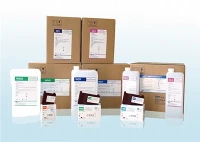


As a urine sediment supplier, I've found that market research is super crucial for staying ahead in this competitive industry. It's not just about selling our products like PACK-SF for Urine Sediment Analyzer UF-4000/5000 Series, CLEANER-SYS-K for Urine Sediment Analyzer UF-4000/5000 Series, and STAIN-SF for Urine Sediment Analyzer UF-4000/5000 Series. It's about understanding what our customers need and how we can meet those needs better than anyone else.
Understanding the Basics of Market Research
First off, let's talk about what market research actually is. It's all about gathering information about the market we're in, including our customers, competitors, and industry trends. This info helps us make smart decisions about our products, pricing, and marketing strategies.
There are two main types of market research: primary and secondary. Primary research involves collecting new data directly from our target customers. This can be done through surveys, interviews, focus groups, or observations. Secondary research, on the other hand, uses existing data from sources like industry reports, government statistics, and academic studies.
Conducting Primary Research
When it comes to primary research, surveys are one of the most common methods. We can create online surveys and send them to our existing customers, potential customers, and even healthcare professionals who use urine sediment analyzers. The surveys can ask about their experiences with our products, their needs and preferences, and what they think about our competitors.
Interviews are another great way to get in-depth information. We can schedule one-on-one interviews with key customers or industry experts. These interviews allow us to ask follow-up questions and really understand their perspectives. Focus groups are also useful. We can bring together a small group of customers or potential customers to discuss our products and get their feedback.
Observations can be valuable too. We can visit hospitals, clinics, or laboratories where our products are used. By watching how people use our products in real-life settings, we can identify any issues or areas for improvement.
Analyzing Secondary Research
Secondary research is a goldmine of information. We can start by looking at industry reports. These reports often provide data on market size, growth trends, and competitive landscape. Government statistics can also give us insights into the healthcare industry as a whole, including factors like population demographics and healthcare spending.
Academic studies can offer valuable research on the latest technologies and best practices in urine sediment analysis. By staying up-to-date with these studies, we can ensure that our products are using the most advanced and effective methods.
Identifying Our Target Market
One of the key steps in market research is identifying our target market. This includes understanding who our customers are, what their needs are, and how we can reach them. Our target market may include hospitals, clinics, laboratories, and research institutions.


We need to consider factors like the size of the facility, the volume of urine samples they process, and their budget. For example, large hospitals may have a higher volume of samples and a larger budget, while smaller clinics may be more price-sensitive.
Assessing Our Competitors
Another important aspect of market research is assessing our competitors. We need to know who they are, what products they offer, and how they position themselves in the market. By analyzing our competitors, we can identify our unique selling points and find ways to differentiate our products.
We can look at their pricing strategies, product features, and marketing campaigns. We can also read customer reviews and feedback to see what customers like and dislike about their products. This information can help us improve our own products and services.
Using Market Research to Improve Our Products
Once we've gathered and analyzed the market research data, it's time to use it to improve our products. We can use the feedback from customers to make changes to our existing products or develop new ones. For example, if customers are complaining about the ease of use of our products, we can work on improving the user interface.
We can also use market research to identify new opportunities for product development. For instance, if there is a growing demand for more accurate and efficient urine sediment analysis, we can invest in research and development to create products that meet this need.
Marketing and Promotion Based on Market Research
Market research also plays a crucial role in our marketing and promotion strategies. By understanding our target market and their needs, we can create more effective marketing campaigns. We can tailor our messaging to resonate with our customers and highlight the benefits of our products.
We can also use market research to determine the best channels to reach our target market. For example, if our target market is more likely to use social media, we can focus our marketing efforts on platforms like Facebook and Twitter.
Conclusion
Market research is an ongoing process for us as urine sediment suppliers. It helps us understand our customers, competitors, and industry trends. By using the insights from market research, we can improve our products, develop effective marketing strategies, and stay ahead in the market.
If you're interested in learning more about our urine sediment products or have any questions, we'd love to hear from you. Whether you're a hospital, clinic, laboratory, or research institution, we're here to provide you with high-quality products and excellent customer service. Contact us to start a discussion about your needs and how we can help.
References
- Various industry reports on urine sediment analysis
- Government healthcare statistics
- Academic studies on urine sediment analysis technologies