


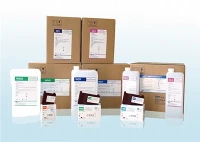


Hey there! I'm excited to share the ins and outs of how a biochemistry semi-auto analyzer works. As a supplier of Biochemistry Semi Auto Analyzer, I've seen firsthand the importance of these nifty machines in the medical and research fields.
Let's start with the basics. A biochemistry semi-auto analyzer is a device used to measure various substances in biological samples, like blood, urine, and cerebrospinal fluid. These measurements help doctors and researchers diagnose diseases, monitor treatment progress, and conduct scientific studies.
Sample Preparation
The first step in the process is sample preparation. You've got to collect the biological sample, which could be a blood draw or a urine sample, for example. Then, you might need to do some pre - treatment to make sure the sample is in the right condition for analysis. This could involve centrifugation to separate the different components of the blood, like red blood cells, white blood cells, and plasma. Once the sample is ready, you transfer a small amount of it into a cuvette or a test tube, which will be used in the analyzer.
Reagent Addition
Next up is reagent addition. Reagents are special chemicals that react with the substances you want to measure in the sample. Each test requires a specific set of reagents. For example, if you're measuring glucose levels in the blood, you'll use reagents that react with glucose to produce a color change. The semi - auto analyzer usually has a reagent tray where you can place the different reagent bottles. You manually pipette the appropriate amount of reagent into the cuvette containing the sample. This is one of the key differences between semi - auto and fully - automatic analyzers; in a semi - auto analyzer, you're more involved in this step.
Incubation
After adding the reagent to the sample, the cuvette is placed in an incubation chamber. Incubation is like a little waiting period where the chemical reaction between the sample and the reagent can occur. The analyzer maintains a specific temperature, usually around 37°C, which is the normal body temperature. This optimal temperature helps speed up the reaction and ensures accurate results. The length of the incubation time depends on the type of test being performed. Some reactions might take just a few minutes, while others could take up to half an hour.
Measurement
Once the incubation is complete, it's time for measurement. The semi - auto analyzer uses a spectrophotometer to measure the amount of light absorbed or transmitted by the sample in the cuvette. Different substances absorb light at different wavelengths. For example, if the reaction between the sample and the reagent produces a colored product, the spectrophotometer will measure the intensity of the color. The more of the substance you're measuring in the sample, the more light will be absorbed or the less light will be transmitted.
The analyzer has a light source that emits light at a specific wavelength. The light passes through the cuvette containing the sample, and a detector on the other side measures the amount of light that makes it through. This measurement is then converted into a numerical value. The analyzer has pre - programmed calibration curves for each test. These curves relate the measured light absorbance or transmittance to the concentration of the substance in the sample. So, based on the measurement, the analyzer can calculate the actual concentration of the substance in the sample.
Data Processing and Display
After the measurement is taken, the analyzer processes the data. It uses the calibration curves to convert the raw measurement data into meaningful results. The results are then displayed on the analyzer's screen. You can see things like the concentration of glucose, cholesterol, or other substances in the sample. Some analyzers also have the option to print out the results or transfer them to a computer for further analysis and record - keeping.
Advantages of a Semi - Auto Analyzer
One of the big advantages of a Semi - automatic Biochemical Analyzer is its flexibility. Since you have more control over the process, you can easily adapt it to different types of samples and tests. It's also a more affordable option compared to fully - automatic analyzers. This makes it a great choice for smaller clinics, research labs with a limited budget, or for performing a small number of tests.
Maintenance and Troubleshooting
Like any piece of equipment, a biochemistry semi - auto analyzer needs regular maintenance to keep it working properly. You should clean the cuvette holders, the reagent trays, and the optical components regularly. It's also important to check the calibration of the analyzer periodically to ensure accurate results.
If you run into problems, like inaccurate measurements or error messages on the screen, there are a few things you can do. First, check the reagents to make sure they're not expired or contaminated. You should also check the cuvettes for any signs of damage or dirt. Sometimes, a simple restart of the analyzer can fix minor glitches. If the problem persists, it might be a good idea to contact the manufacturer's technical support.
Why Choose Our Biochemistry Semi Auto Analyzers
As a supplier, we take pride in offering high - quality biochemistry semi - auto analyzers. Our analyzers are designed with the latest technology to ensure accurate and reliable results. They're also user - friendly, making them easy for both experienced technicians and beginners to operate. We offer a wide range of models to suit different needs and budgets. Whether you're a small clinic looking for a basic analyzer or a research lab that needs more advanced features, we've got you covered.
If you're interested in learning more about our Biochemistry Semi Auto Analyzer or are thinking about making a purchase, don't hesitate to reach out. We're here to answer all your questions and help you find the perfect analyzer for your needs. Contact us today to start a conversation about how our products can benefit your work.


References
- Clinical Biochemistry: Principles, Techniques, and Correlations. Kaplan & Pesce.
- Textbook of Clinical Chemistry and Molecular Diagnostics. Burtis, Ashwood, and Bruns.