


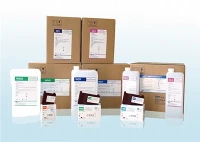


Ensuring the safety of hematology analyzer OEM products is of paramount importance in the medical device industry. As a hematology analyzer OEM supplier, I understand the critical role these devices play in healthcare. In this blog, I will share some key strategies and considerations to ensure the safety of our hematology analyzer OEM products.
1. Quality Control in the Manufacturing Process
The manufacturing process is the foundation of product safety. We implement strict quality control measures at every stage of production. Starting from the selection of raw materials, we carefully choose high - quality components that meet international standards. For example, the sensors used in our hematology analyzers are sourced from reliable suppliers with a proven track record of quality.
During the assembly process, we follow standardized operating procedures. Each step is carefully monitored to ensure that the analyzers are built with precision. Our production line is equipped with advanced testing equipment to detect any potential defects early on. For instance, we use automated testing systems to check the electrical performance, optical accuracy, and fluidic functionality of the analyzers.
2. Compliance with Regulatory Standards
Compliance with regulatory standards is non - negotiable. We are well - aware of the various international and national regulations governing medical devices. In the United States, the Food and Drug Administration (FDA) has strict requirements for hematology analyzers. We ensure that our products meet all the relevant FDA regulations, including design controls, risk management, and post - market surveillance.
In Europe, the CE marking is a mandatory requirement. Our products undergo rigorous testing to obtain the CE mark, which indicates that they meet the essential health and safety requirements of the European Union. We also keep up - to - date with any changes in regulatory requirements to ensure continuous compliance.
3. Risk Assessment and Management
Risk assessment is an ongoing process in ensuring product safety. We conduct comprehensive risk assessments to identify potential hazards associated with our hematology analyzer OEM products. These hazards can include electrical shock, mechanical failures, and inaccurate test results.
Once the hazards are identified, we develop risk mitigation strategies. For example, to prevent electrical shock, we use proper insulation and grounding in our analyzers. To address the risk of inaccurate test results, we implement calibration procedures and quality control checks. Regular audits are also conducted to ensure that the risk management processes are effective.
4. Software Safety
In modern hematology analyzers, software plays a crucial role. We ensure the safety of the software by following software development best practices. Our software development team uses rigorous coding standards and conducts thorough testing at every stage of development.
We also implement software security measures to protect patient data. This includes encryption of data transmission and storage, as well as access controls to prevent unauthorized access to the software. Regular software updates are provided to fix any security vulnerabilities and improve the performance of the analyzers.
5. Training and Support
Proper training and support are essential for the safe use of our hematology analyzer OEM products. We provide comprehensive training programs for our customers, including healthcare professionals and laboratory technicians. These training programs cover the operation, maintenance, and troubleshooting of the analyzers.
We also offer technical support services to assist customers in case of any issues. Our support team is available 24/7 to answer questions and provide solutions. By ensuring that our customers are well - trained and supported, we can minimize the risk of improper use of the analyzers, which can lead to safety issues.
6. Post - Market Surveillance
Post - market surveillance is an important part of ensuring product safety. We collect and analyze data from our customers to monitor the performance of our hematology analyzers in real - world settings. This data can help us identify any emerging safety issues and take appropriate actions.
For example, if we receive reports of inaccurate test results from multiple customers, we will investigate the issue immediately. We may conduct additional testing on the affected analyzers and, if necessary, issue product recalls or provide software updates to address the problem.
7. Product Design and Usability
The design of our hematology analyzers is focused on both functionality and safety. We consider the ergonomics of the device to ensure that it is easy to use and operate. For example, the user interface is designed to be intuitive, with clear instructions and visual cues.
We also take into account the potential for human error in the design. For instance, we use color - coding and labeling to distinguish different reagents and components, reducing the risk of mis - handling.
8. Collaboration with Partners
We collaborate closely with our partners, including component suppliers and research institutions. By working together, we can share knowledge and expertise to improve the safety of our hematology analyzer OEM products.
Our component suppliers play a crucial role in ensuring the quality of the raw materials. We work with them to develop and implement quality control measures. Research institutions can provide valuable insights into the latest technological advancements and emerging safety issues in the field of hematology analysis.


Conclusion
Ensuring the safety of hematology analyzer OEM products is a complex and multi - faceted process. By implementing strict quality control measures, complying with regulatory standards, conducting risk assessments, ensuring software safety, providing training and support, conducting post - market surveillance, focusing on product design and usability, and collaborating with partners, we can provide high - quality and safe hematology analyzers to our customers.
If you are interested in our hematology analyzer OEM products, such as the 3 - part Differential Hematology Instrument and 5 - part Differential Hematology Instrument, please feel free to contact us for procurement and further discussions.
References
- International Electrotechnical Commission (IEC). Medical electrical equipment - Part 60601 - 1: General requirements for basic safety and essential performance.
- U.S. Food and Drug Administration (FDA). Guidance for Industry and Food and Drug Administration Staff: Classification of Hematology Analyzers.
- European Union Medical Device Regulation (MDR) 2017/745.