


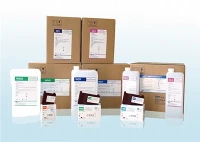


What is the accuracy of a hematology analyzer?
Hey there! As a supplier of hematology analyzers, I often get asked about the accuracy of these nifty machines. So, let's dig into what accuracy really means in the context of hematology analyzers and why it's super important.


First off, what does accuracy even refer to when we talk about a hematology analyzer? In simple terms, accuracy is how close the results the analyzer gives are to the true values of the blood parameters it's measuring. For example, if a patient's actual red blood cell count is 5 million per microliter, an accurate hematology analyzer should give a result pretty close to that number.
There are several factors that can affect the accuracy of a hematology analyzer. One of the biggies is the technology it uses. Different analyzers use different methods to count and analyze blood cells. Some use impedance technology, which measures changes in electrical resistance as cells pass through a small aperture. Others use optical methods, like flow cytometry, which can provide more detailed information about cell characteristics.
The 5-part Differential Hematology Instrument is a great example of a high - tech analyzer. It can differentiate between five different types of white blood cells (neutrophils, lymphocytes, monocytes, eosinophils, and basophils) with high precision. This is crucial because different white blood cell types play different roles in the immune system, and an accurate breakdown can help doctors diagnose a wide range of diseases, from infections to blood cancers.
On the other hand, the 3-part Differential Hematology Instrument is a bit more basic. It divides white blood cells into three broad categories: lymphocytes, monocytes, and granulocytes. It's still useful in many settings, especially where a more detailed breakdown isn't always necessary or where resources are limited.
Another factor that can impact accuracy is the quality of the reagents used. Reagents are the chemicals that react with the blood sample to allow the analyzer to measure various parameters. If the reagents are of poor quality or are not stored properly, they can give inaccurate results. For instance, if a reagent used to stain white blood cells is expired or contaminated, it might not stain the cells correctly, leading to inaccurate cell counts.
The calibration of the analyzer is also key. Just like a weighing scale needs to be calibrated to give accurate weights, a hematology analyzer needs to be calibrated regularly to ensure it's giving correct results. Calibration involves using a known sample with a set of defined values and adjusting the analyzer so that it gives the correct results for that sample. If an analyzer isn't calibrated properly, it can give results that are consistently too high or too low.
The sample itself can also affect accuracy. If the blood sample is not collected correctly, for example, if it's contaminated with tissue fluid or if it clots before analysis, it can lead to inaccurate results. Also, the age of the sample matters. Some blood parameters can change over time, so it's important to analyze the sample within a certain time frame.
So, why is accuracy so important in a hematology analyzer? Well, accurate results are the foundation of good medical diagnosis and treatment. Doctors rely on the results from hematology analyzers to make decisions about a patient's health. If the results are inaccurate, it could lead to misdiagnosis. For example, if an analyzer gives a falsely low white blood cell count, a doctor might miss a serious infection. On the other hand, a falsely high count could lead to unnecessary further testing and treatment.
In addition to medical diagnosis, accurate hematology analysis is also important for research. Scientists use hematology data to study diseases, develop new treatments, and understand how the body works. Inaccurate data can lead to faulty conclusions and wasted research efforts.
As a supplier of hematology analyzers, we take accuracy very seriously. We work hard to ensure that our analyzers are made with the latest technology, use high - quality reagents, and are easy to calibrate. We also provide training and support to our customers to help them get the most accurate results possible.
If you're in the market for a hematology analyzer, whether it's a 5-part Differential Hematology Instrument for a large hospital or a 3-part Differential Hematology Instrument for a small clinic, we'd love to talk to you. We can help you find the right analyzer for your needs and ensure that you get accurate results every time. Don't hesitate to reach out for a chat about your requirements and how we can assist you in your procurement process.
References
- McPherson RA, Pincus MR. Henry's Clinical Diagnosis and Management by Laboratory Methods. 23rd ed. Elsevier; 2017.
- Burtis CA, Ashwood ER, Bruns DE. Tietz Textbook of Clinical Chemistry and Molecular Diagnostics. 5th ed. Elsevier; 2012.