




Hey there! So, I've been in the urine sediment quotation business for quite some time now, and one question that keeps popping up is: What's the relationship between urine sediment quotation and kidney stones? Well, let's dive right in and break it down.
First off, let's talk about what urine sediment is. Urine sediment is basically the stuff that settles at the bottom of a urine sample when it's left to stand. It can include all sorts of things like cells, crystals, bacteria, and other debris. Analyzing urine sediment can give doctors a whole lot of information about a person's health, including whether they might have kidney stones.
Kidney stones are hard deposits made of minerals and salts that form inside your kidneys. They can be as small as a grain of sand or as big as a golf ball, and they can cause a whole world of pain when they start to move through the urinary tract. But how does urine sediment come into play here?
Well, when you have kidney stones, your body tries to get rid of them through your urine. As the stones break down or pass through the urinary system, they can leave behind traces in the urine sediment. For example, certain types of crystals might be present in the sediment, which can be a tell - tale sign of kidney stones.
One of the key things that urine sediment analysis can do is help identify the type of kidney stones a person has. There are different types of kidney stones, such as calcium oxalate stones, uric acid stones, and struvite stones. Each type has its own characteristic crystals that can show up in the urine sediment. By analyzing these crystals, doctors can figure out the type of stone and come up with the best treatment plan.
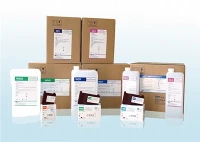
As a urine sediment quotation supplier, I know how important it is to have accurate and reliable reagents for urine sediment analysis. That's where our products come in. We offer top - notch reagents like PACK-CR for Urine Sediment Analyzer UF - 4000/5000 Series, STAIN - CR for Urine Sediment Analyzer UF - 4000/5000 Series, and SHEATH - SYS - UF for Urine Sediment Analyzer UF - 4000/5000 Series. These reagents are designed to make the analysis of urine sediment as accurate as possible, which is crucial when it comes to detecting and diagnosing kidney stones.
When it comes to kidney stones, early detection is key. The sooner doctors can identify the presence of kidney stones, the better the chances of treating them effectively and preventing complications. Urine sediment analysis is one of the first steps in this process. By looking at the sediment, doctors can spot any abnormalities that might indicate the presence of kidney stones.
For example, if there are a large number of calcium oxalate crystals in the urine sediment, it could be a sign that the patient is at risk of developing calcium oxalate kidney stones. This information can then be used to recommend lifestyle changes, such as increasing fluid intake or reducing the consumption of foods high in oxalates.
Another way urine sediment analysis can help with kidney stones is by monitoring the progress of treatment. Once a patient starts treatment for kidney stones, regular urine sediment analysis can show whether the treatment is working. If the number of crystals in the sediment decreases over time, it's a good sign that the stones are being broken down and passed out of the body.
Now, let's talk a bit about how the process of urine sediment analysis actually works. First, a urine sample is collected from the patient. This sample is then centrifuged, which means it's spun at high speed to separate the sediment from the liquid part of the urine. The sediment is then examined under a microscope.
This is where our reagents really shine. The PACK - CR for Urine Sediment Analyzer UF - 4000/5000 Series helps to prepare the sediment for analysis, making it easier to see the different components. The STAIN - CR for Urine Sediment Analyzer UF - 4000/5000 Series stains the cells and crystals in the sediment, making them more visible under the microscope. And the SHEATH - SYS - UF for Urine Sediment Analyzer UF - 4000/5000 Series helps to keep the sample flowing smoothly through the analyzer, ensuring accurate results.
In addition to detecting kidney stones, urine sediment analysis can also help identify other problems in the urinary system. For example, it can detect urinary tract infections, which can sometimes be a complication of kidney stones. If there are a lot of white blood cells or bacteria in the urine sediment, it could be a sign of an infection.


So, as you can see, there's a very close relationship between urine sediment quotation and kidney stones. Urine sediment analysis is a powerful tool for detecting, diagnosing, and monitoring kidney stones. And as a supplier of high - quality urine sediment reagents, we're committed to helping doctors and healthcare professionals get the most accurate results possible.
If you're in the market for reliable urine sediment reagents for your laboratory or healthcare facility, we'd love to talk to you. Whether you're dealing with kidney stone cases or other urinary system issues, our products can make a real difference in your analysis. Reach out to us to start a conversation about your needs and how we can help you.
References
- Pak, C. Y. C., & Sakhaee, K. (2017). Medical management of kidney stones: AUA guideline. American Urological Association.
- Coe, F. L., Evan, A. P., & Worcester, E. M. (2014). Kidney stones. The New England Journal of Medicine, 370(4), 333 - 343.
- Lieske, J. C., & Coe, F. L. (2016). Kidney stones: Pathophysiology and medical management. Clinical Journal of the American Society of Nephrology, 11(11), 2023 - 2034.