


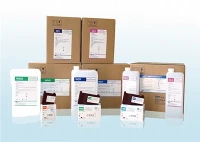


In the field of medical diagnostics, hematology analyzers play a crucial role in providing accurate and timely blood test results. As a hematology analyzer OEM supplier, I have in - depth knowledge of different models available in the market. This blog aims to compare various hematology analyzer OEM models, highlighting their features, advantages, and limitations.
1. 3 - part Differential Hematology Instrument
The 3 - part Differential Hematology Instrument is one of the commonly used models in many medical facilities. This type of analyzer can classify white blood cells into three main categories: lymphocytes, monocytes, and granulocytes.


Features
- Cost - effective: One of the significant advantages of the 3 - part differential hematology instrument is its relatively low cost. This makes it an attractive option for small - to - medium - sized clinics and laboratories with budget constraints.
- Simple operation: It has a straightforward operating system, which means that laboratory technicians with basic training can easily operate it. This simplicity reduces the need for extensive training and also minimizes the chances of operator - induced errors.
- Quick results: The 3 - part differential hematology instrument can provide results in a relatively short time. This is especially important in clinical settings where prompt diagnosis is required.
Limitations
- Limited cell classification: As the name suggests, it can only differentiate white blood cells into three broad categories. This may not be sufficient for more complex medical cases where a more detailed analysis of white blood cell subtypes is needed.
- Lower accuracy in some cases: In certain situations, such as when there are abnormal cell populations, the accuracy of the 3 - part differential may be compromised.
2. 5 - part Differential Hematology Instrument
The 5 - part Differential Hematology Instrument offers a more detailed analysis of white blood cells compared to the 3 - part differential model. It can classify white blood cells into five distinct types: neutrophils, lymphocytes, monocytes, eosinophils, and basophils.
Features
- High - level cell classification: The ability to differentiate white blood cells into five types provides more detailed information about a patient's immune system. This is particularly useful in diagnosing various diseases, such as infections, autoimmune disorders, and blood cancers.
- Advanced technology: These analyzers often incorporate advanced technologies, such as flow cytometry and impedance measurement, to ensure accurate and reliable results.
- Comprehensive reporting: The 5 - part differential hematology instrument can generate comprehensive reports that include detailed information about the different white blood cell types, as well as other blood parameters.
Limitations
- Higher cost: The 5 - part differential hematology instrument is generally more expensive than the 3 - part differential model. This can be a significant barrier for some medical facilities, especially those with limited financial resources.
- Complex operation: Due to its advanced technology, the 5 - part differential hematology instrument requires more specialized training for operators. This can increase the training time and cost for laboratories.
3. Comparison of Other Key Parameters
Sample Volume
- 3 - part differential hematology instruments typically require a relatively small sample volume. This is beneficial in situations where only a small amount of blood is available, such as in pediatric patients or patients with difficult venipuncture.
- 5 - part differential hematology instruments may require a slightly larger sample volume, but this is usually still within an acceptable range for most clinical applications.
Throughput
- The throughput of an analyzer refers to the number of samples it can process in a given time. 5 - part differential hematology instruments generally have a higher throughput compared to 3 - part differential models. This makes them more suitable for high - volume laboratories where a large number of samples need to be processed quickly.
Maintenance
- 3 - part differential hematology instruments are generally easier to maintain. They have fewer components and simpler technology, which means that maintenance and repair costs are usually lower.
- 5 - part differential hematology instruments, on the other hand, require more frequent maintenance due to their complex technology. However, proper maintenance is crucial to ensure the accuracy and reliability of the results.
4. Choosing the Right Model
When choosing a hematology analyzer OEM model, several factors need to be considered:
- Clinical needs: If the medical facility mainly deals with routine blood tests and does not require detailed white blood cell classification, a 3 - part differential hematology instrument may be sufficient. However, for more complex cases and research purposes, a 5 - part differential hematology instrument is recommended.
- Budget: The cost of the analyzer, including the purchase price, maintenance, and consumables, is an important consideration. Smaller clinics may need to opt for the more cost - effective 3 - part differential model, while larger hospitals and research institutions may be able to afford the more advanced 5 - part differential instrument.
- Sample volume and throughput requirements: Facilities with a high volume of samples and a need for quick results should consider a 5 - part differential hematology instrument with a high throughput.
5. Conclusion
In conclusion, both 3 - part and 5 - part differential hematology instruments have their own advantages and limitations. As a hematology analyzer OEM supplier, we understand the diverse needs of different medical facilities. Whether you are looking for a cost - effective solution for routine blood tests or a high - end instrument for in - depth research, we can provide the right hematology analyzer model for you.
If you are interested in learning more about our hematology analyzer OEM models or would like to discuss your specific requirements, please feel free to contact us for procurement and negotiation. We are committed to providing high - quality products and excellent customer service to meet your needs.
References
- Smith, J. (2018). Hematology analyzers: A review of technology and applications. Journal of Clinical Laboratory Analysis, 32(2), e22498.
- Johnson, A. (2019). Comparison of 3 - part and 5 - part differential hematology analyzers in a clinical setting. Clinical Chemistry, 65(3), 456 - 463.